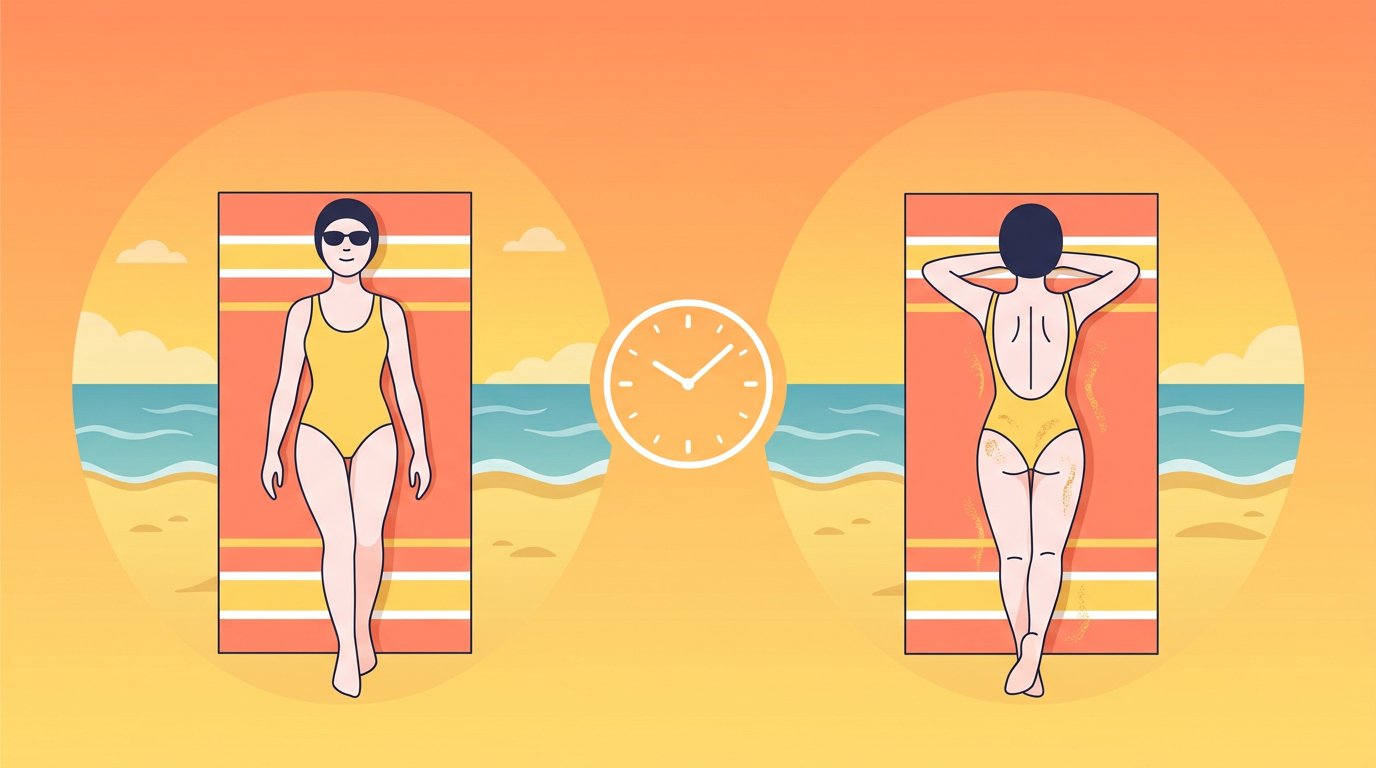
The Pale Feet Problem
You've got a gorgeous tan going — arms, legs, shoulders, everything looks amazing. And then you look down at your feet and they're still blindingly white. Or worse, you've got those crispy sandal tan lines that make it look like you're wearing invisible shoes. The pale feet struggle is one of the most universally relatable tanning problems, and almost nobody talks about how to fix it.
Your feet are actually one of the hardest body parts to tan evenly, and there are real reasons for that. But it's definitely fixable with a little focused attention.
Why Feet Are Hard to Tan
Several things work against your feet when it comes to tanning:
They're usually covered. Unless you live in sandals or go barefoot constantly, your feet spend most of the day inside shoes and socks. They get way less casual UV exposure than your arms or legs. The skin is different. The tops of your feet have relatively thin skin, but the overall structure — bones close to the surface, less fat — means it tans differently than fleshier areas. Angle issues. When you're lying down, your feet are typically angled away from the sun rather than facing it directly. They end up in their own shadow half the time. They burn easily. Because they get so little regular exposure, the tops of your feet are extremely burn-prone. People often forget to put sunscreen on them and end up with painful foot sunburns.
Position Your Feet for UV
The biggest fix is simply making sure your feet actually face the sun. When you lie on your back, point your toes up toward the sky (not flopped to the sides). This exposes the top of your feet to direct overhead UV. When the sun is lower (morning or evening), angle your feet toward it — point your toes in the direction of the sun.
When you lie on your stomach, let your feet hang off the edge of the towel or lounger so the tops are exposed to the sun. A lot of people lie face-down with their feet flat, which means the tops are pressed against the ground and getting zero UV.
And here's a simple hack: spend some of your tanning time sitting upright in a chair with your legs extended and feet flat on the ground in front of you, tops facing up. This gives your feet consistent, direct sun that they don't get when you're lying down.
Dealing With Sandal Tan Lines
Sandal tan lines are the bane of summer feet. You wear your favorite sandals all summer, and suddenly you have a permanent pattern on your feet. Here's how to deal with them:
Prevention: Alternate between different sandal styles so the covered areas change. Switch between flip-flops, slides, strappy sandals, and barefoot time. This distributes UV more evenly across your feet. Fixing existing lines: Go barefoot during your tanning sessions. Apply SPF to the darker areas (the parts that were exposed by your sandals) and let the paler strap lines get unprotected sun to catch up. After a week or two, the contrast should soften significantly.
If you need a quick fix, self-tanner on the pale lines is the fastest solution. Use a small brush or cotton swab to apply tanner precisely on the light stripes. Build gradually until they match the surrounding tan.
SPF on Your Feet — Please
Foot sunburns are no joke. The tops of your feet have thin skin right over bone, and a burn there is extremely painful. Swelling, blistering, and then trying to put shoes on burned feet? Miserable. And because feet are usually an afterthought, people forget to sunscreen them and end up in agony.
Every time you tan, apply SPF to the tops of your feet. SPF 30 minimum. If your feet are very pale and haven't had sun in a while, use SPF 50 for the first few sessions. Reapply after an hour. Don't skip this step — a foot burn will sideline you from tanning (and from wearing shoes comfortably) for days.
The Self-Tanner Solution
For many people, the easiest way to get even-looking feet is self-tanner. Apply it all over the tops of your feet, but go light on the toes (they tend to grab more product and can go dark fast) and blend well around the ankle.
The ankle-to-foot transition is a common problem area. Your ankles might already be tan from leg exposure, but the tops of your feet are pale. When applying self-tanner, feather it from the top of the foot up over the ankle to create a seamless blend. Don't stop the application in a hard line at the ankle.
Wash your hands immediately after applying to avoid orange palms, and wipe between your toes with a damp cloth — product can pool there and create dark streaks.
Toenail and Toe Tips
A couple of small details that make a big difference: remove nail polish before tanning your feet if you want even color. Nail polish blocks UV from the nail bed area and can leave weird pale spots. You can repaint after your session.
Your toes tan differently from the top of your foot because they're smaller and at different angles. Wiggle and spread your toes occasionally during tanning to make sure UV reaches between them and on all surfaces. Otherwise you end up with tan tops and pale sides.
Feet take a little extra effort, but it's worth it. Nothing ruins an otherwise perfect tan like ghost-white feet peeking out of your sandals. Give your feet the attention they deserve and your whole tan will look more polished and complete.
Learn more: How Long to Tan Each Side | All About Tan Lines
2-Week Foot Tan Catch-Up
Week 1: Add 5-10 extra minutes of foot exposure per session. Sit up, feet flat, tops facing sky. SPF 30 on feet, SPF 50 on legs to slow them. Between sessions, gradual self-tanner on foot tops every other evening — go light, feet absorb DHA fast. Wipe between toes after application.
Week 2: Continue extra exposure. Fine-tune with self-tanner only where needed. By end, contrast dramatically reduced.
Why Feet Burn So Badly
Thin skin over bone: Inflammation swells against bone structure — intense pressure pain. Constant friction: Walking and shoes aggravate the burn. Slow healing: Poor circulation means 5-7 day recovery versus 3-4 for equivalent arm burn.
Prevention: SPF 30-50 every session. If foot tops look pink, cover with towel immediately. Use the tanning calculator.
Sandal Season Aesthetics
Nail colors: White and pale pink for classic contrast. Coral and peach harmonize with golden undertones. Bright red is dramatic. Avoid nudes that match tanned skin — nails disappear.
Ankle jewelry: Simple anklet draws attention to tanned ankles. Gold chains are especially flattering.
Sandal selection: Minimal with thin straps to show off the tan. Avoid chunky sandals that create new lines.
Ghost-white feet undermine the whole look. Give feet targeted tanning, smart SPF, and self-tanner help. Check our skin type quiz — feet that rarely see sun may be effectively a skin type lighter than the rest of your body.
The Flip-Flop Dilemma: Tan Lines vs. Protection
Flip-flops are the most common sandal type in summer, and they create the most recognizable tan line — the V-shaped strap mark across the top of your foot. Here is how to handle the flip-flop situation:
During dedicated tanning sessions: Go barefoot entirely. Remove all footwear and let your feet get even UV. This is the simplest solution and the one that produces the best results. If you are at a public pool or beach, flip-flops are fine for walking around but take them off when you settle into your tanning spot.
During daily activities: Alternate between flip-flops, slides, and other sandal styles throughout the week. Each style covers different parts of your foot, which distributes UV exposure more evenly over time. Monday in flip-flops, Wednesday in slides, Friday in strappy sandals — by the end of the week, your entire foot has gotten relatively even casual exposure.
If you already have flip-flop lines: The V-shaped pale mark can be addressed with the same targeted approach as any other tan line. Apply self-tanner precisely to the pale V shape every other day. Do barefoot tanning sessions with SPF 50 on the darker parts of your foot (the areas that were exposed by the flip-flop) and SPF 30 on the pale V. Within 1-2 weeks, the contrast fades significantly.
Prevention going forward: The best long-term solution is to go barefoot as much as safely possible during tanning season. Every hour barefoot — in your backyard, at the beach, on your patio — is an hour of even foot tanning that counteracts the uneven exposure from footwear during the rest of the day.
Winter Foot Maintenance
Foot tans fade faster than almost any other body part because feet shed skin quickly (think about how much walking you do daily — constant friction). Here is how to maintain foot color even as the rest of your tan is going strong:
Daily moisturizing: Apply foot cream or body lotion to the tops of your feet every night before bed. Dry skin sheds faster, and feet are naturally dry. A simple nightly moisture habit extends your foot tan significantly.
Gradual self-tanner maintenance: Apply gradual self-tanner to the tops of your feet once per week. This supplements any natural fading and keeps your feet matching the rest of your body. The key is consistency — weekly application prevents the gradual whitening that otherwise happens.
Exfoliate carefully: Unlike the rest of your body, where regular exfoliation is encouraged, go EASY on your feet during tanning season. The tops of your feet have thin skin that sheds quickly enough on its own. Aggressive exfoliation strips your foot tan rapidly. Only exfoliate the soles and heels (which do not tan anyway).