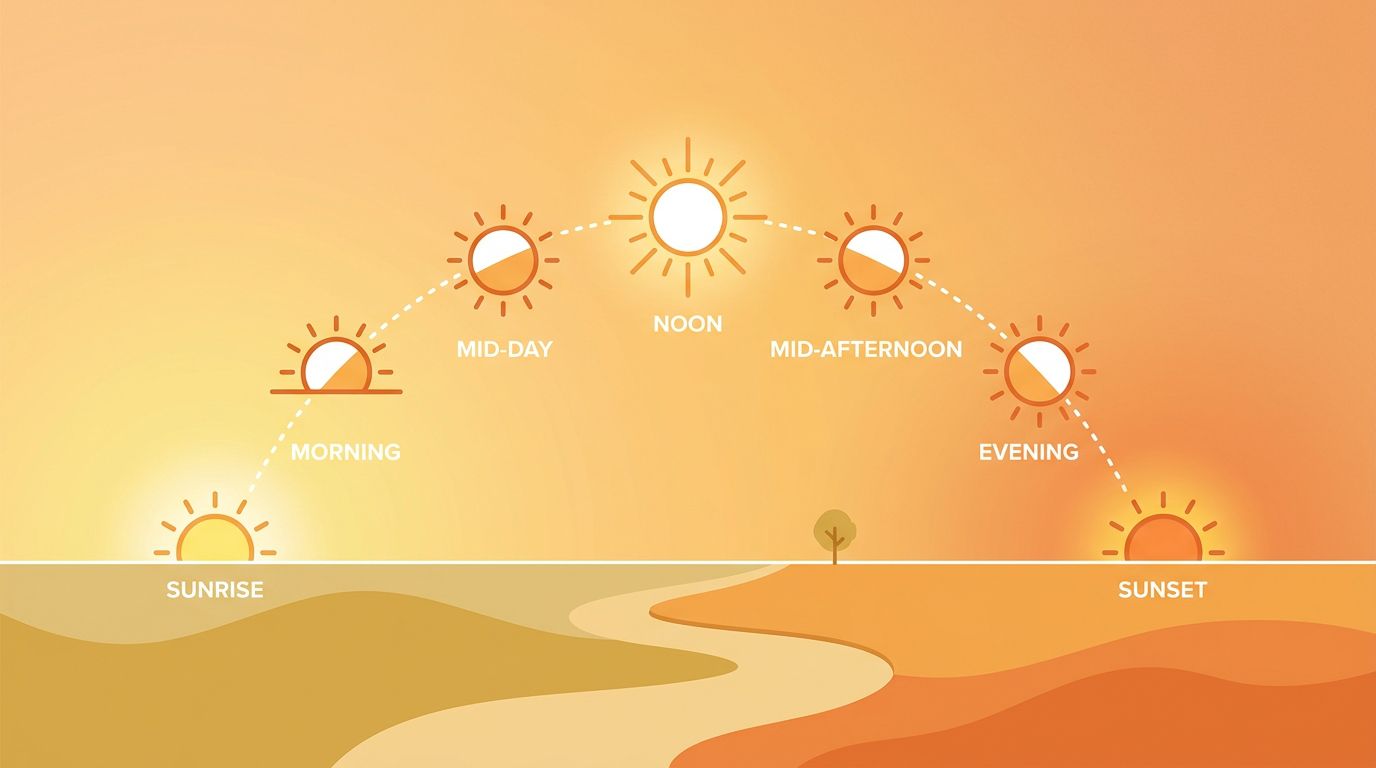
Let's be real about the situation. School ends somewhere between 2:45 and 3:15. By the time you get home, change out of your school clothes, and get set up outside, it's 3:30 at the earliest. UV starts dropping hard after 4pm. In most places, by 5pm the UV index is basically useless for tanning. That gives you roughly a 90-minute window, and honestly, about 40-50 minutes of that is prime tanning time. Sounds limiting? It's actually plenty. Some of the best tans are built in short, consistent sessions — not marathon sun-baking marathons that end in burns.
The 40-Minute After-School Routine
This is your exact play-by-play. Print it out, screenshot it, memorize it. Once you've done it three times, it'll be automatic.
3:15 — Get home, change immediately. Don't sit down, don't start scrolling, don't "just check one thing." The second you walk through the door, change into your tanning outfit. This is a bikini, sports bra and shorts, or whatever you tan in. Have it ready and laid out from the morning so you're not digging through drawers. Every minute you waste inside is a minute of UV you're missing.
3:20 — Apply SPF everywhere. SPF 30 minimum on your entire body. Don't skip the backs of your knees, the tops of your feet, or behind your ears. Apply to your face with SPF 50. Sunscreen doesn't prevent tanning — it prevents burning while you still build melanin. Apply at least 15-20 minutes before UV hits your skin for maximum effectiveness, so doing this step inside while the sunscreen absorbs is ideal.
3:25 — Set up outside. Towel or lounge chair in the sunniest spot. If you're in the backyard, this might shift throughout the season as the sun's angle changes. Check for shade from trees, fences, or buildings that might creep in after 4pm. Have water, your phone (for the timer and for studying — more on that), and tanning products ready. Apply tanning oil or accelerator over your sunscreen if you use one.
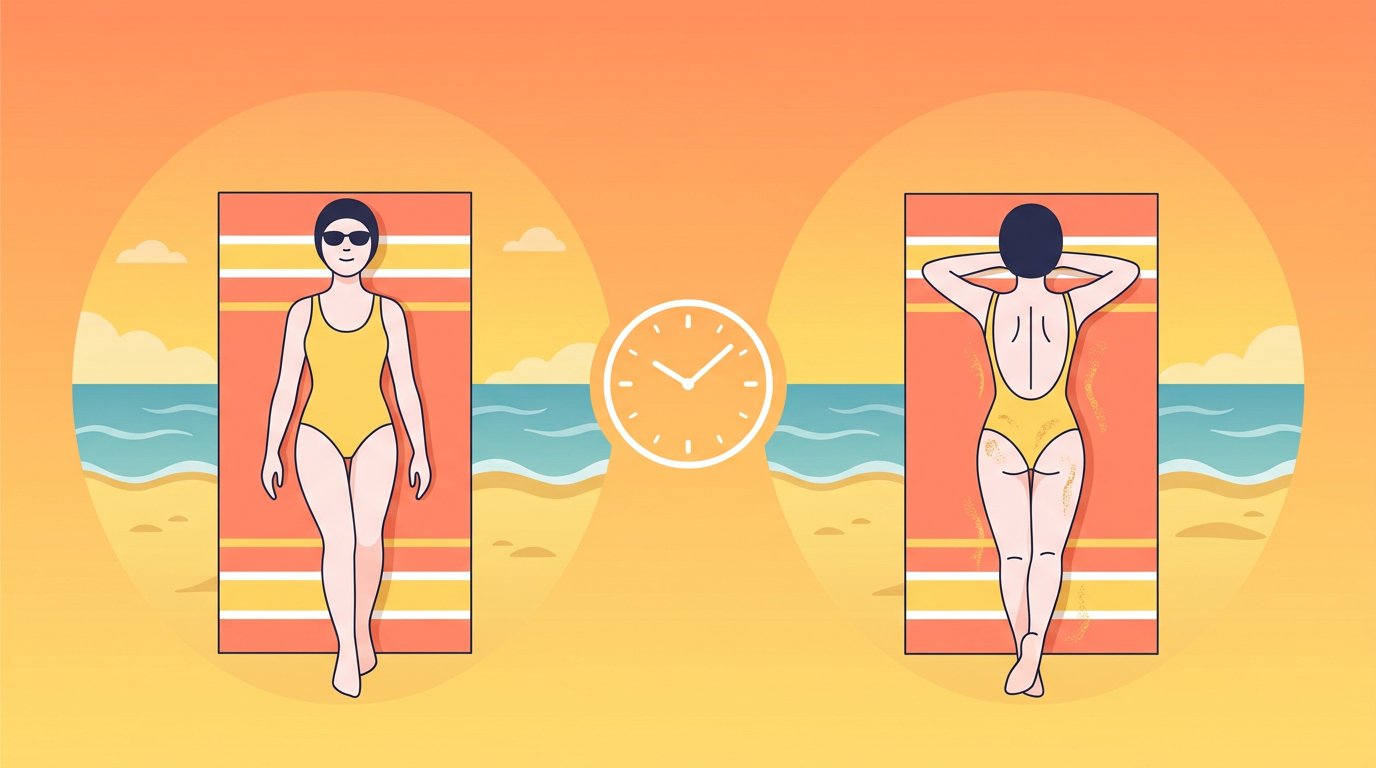
3:30 — Front side, 20 minutes. Set a timer. Lay on your back, legs slightly elevated toward the sun. Arms slightly away from your body so sides get exposure too. Keep your legs angled so they get maximum UV — they need the most help. See our guide on tanning stubborn legs for positioning tips.
3:50 — Flip to back side, 20 minutes. Reset the timer. Face down or to the side. Adjust your position so your calves and the backs of your thighs face the sun directly. If the sun has shifted angle (it does in late afternoon), adjust your towel direction to compensate.
4:10 — Done. Head inside. Apply after-sun moisturizer or aloe to your entire body while skin is still slightly warm. This locks in your session's melanin production. Shower if you want, but lukewarm — not hot. That's it. 40 minutes total tanning time, maybe 50 minutes including setup and wind-down. Totally doable on a school day.
Adjusting for Your Skin Type
The 20-minute-per-side schedule works for medium skin tones at moderate UV. If you're fairer, adjust down:
Fair skin: 12-15 minutes per side. Total session 24-30 minutes. Still plenty for gradual color building. Medium skin: 20 minutes per side as written. The sweet spot. Darker skin: 20-25 minutes per side, though you might run into the UV-dropping-off problem. Weekend sessions are your heavy hitters.
TanAI calculates your exact per-side timing based on your skin type and the real-time UV index, so you never have to guess. It's especially useful for after-school sessions because the UV is changing quickly during this window.
Study While You Tan (Seriously)
Forty minutes is a lot of time, and just lying there staring at the sky gets boring after session three. Turn your tanning time into productive time and you'll actually look forward to it:
Audiobooks for reading assignments. English class assigned a novel? Listen to it while you tan. Audible, Libby (free with most library cards), or Spotify all have huge audiobook libraries. You'll finish more books than you ever did reading in bed, and you'll get a tan while doing it.
Quizlet flashcards on your phone. Vocab, biology terms, history dates — all of these work perfectly as quick-flip study material while tanning. Tip: use a phone shade or hold your phone so you can see the screen. High-brightness mode helps.
Voice notes for essay outlines. Open your voice memo app and talk through your essay ideas out loud. You'll be surprised how much clearer your thoughts get when you say them instead of write them. Transcribe later.
Printed notes. Actual paper is way easier to read in bright sunlight than any screen. Print your class notes or study guides and review them during your session. Bonus: you can hold the paper at angles to avoid glare, unlike your phone.
Podcasts for relevant classes. Taking AP History? There are dozens of review podcasts. Psychology? Tons of content. Even math — some people explain concepts auditorily really well. Search "[your subject] review podcast" and you'll find something.
Weekend Recovery Sessions
Your after-school sessions are about maintaining and gradually building. Your weekend sessions are where you really push your tan forward. Saturday or Sunday morning, when UV is at its daily peak, schedule a longer 45-60 minute session. This is when you can do the full rotation: back, front, left side, right side, as described in our per-side timing guide.
The weekday/weekend split works like this: weekdays maintain your current color and add tiny increments. Weekends build noticeably. Over the course of a month, this consistent approach produces better results than sporadic hour-long sessions because your skin gets regular melanin stimulation without the burn risk of overdoing it.
Check UV Before Every Session
Not every afternoon is worth tanning. Here's the honest truth: if the UV index is below 3 when you get outside, you're not going to see meaningful results from a 40-minute session. Your skin needs a minimum UV threshold to actually activate melanin production in a useful way.
UV 3-4 at 3:30pm: Go for it. This is solid after-school tanning territory. You'll build color gradually. UV 2: Skip the outdoor session. Use a gradual self-tanner as maintenance instead, or just moisturize and rest your skin. UV 5+: Great conditions but be more careful with timing. Shorten your session by a few minutes per side since the UV is stronger. UV below 2: Not worth it. Study inside, moisturize, save your skin for a better day.
Check your weather app or TanAI before every session. UV levels change daily based on cloud cover, season, and atmospheric conditions. A sunny Tuesday might be UV 4 while a hazy Wednesday is UV 2. Don't assume — check.
Your Ideal Weekly Schedule
Here's a realistic weekly plan that fits around school, homework, and actually having a life:
Monday: After-school session (40 min). Tuesday: Rest day. Moisturize. Optional: gradual self-tanner. Wednesday: After-school session (40 min). Thursday: Rest day or light session if UV is good and you have time. Friday: After-school session (40 min). Saturday: Longer morning session (45-60 min) when UV peaks. This is your power session. Sunday: Rest. Heavy moisturizing. Skin recovery.
That's 3-4 sessions per week, which is the sweet spot. Your skin needs 24-48 hours between sessions to fully process the melanin from the previous session. More than 4 sessions per week doesn't make you tan faster — it just increases your UV exposure without proportional color gains. For a deeper dive into scheduling, check our beginner's tanning schedule.
Making It a Habit
The hardest part is the first week. After that, the after-school routine becomes automatic. Lay out your tanning outfit before school. Keep your sunscreen and after-sun products in a little basket by the back door. Set a daily alarm for 3:15 that says "TAN TIME." After a week, you won't need the alarm. It'll just be what you do after school, like how you automatically check your phone when you wake up.
Consistency beats intensity every single time when it comes to tanning. Four weeks of reliable 40-minute after-school sessions will give you better, more even, longer-lasting color than four random 2-hour weekend sessions where you burn once and peel twice.
Disclaimer: This is general info, not medical advice. For skin concerns, talk to a dermatologist.
Seasonal Adjustments to Your After-School Routine
Your after-school tanning window changes dramatically throughout the school year. In early May, sunset is around 8 PM and UV is strong until 5-6 PM — giving you a luxurious 2+ hour window. By late September, sunset is before 7 PM and UV drops below useful levels by 4:30 PM. Here is how to adjust:
Spring (April-May): Your golden window. UV peaks during after-school hours and you have plenty of daylight. This is when you build your base. Maximize these months with 3-4 after-school sessions weekly. Use our tanning calculator to nail the timing.
Summer break: You are free. Shift to morning sessions when UV is strongest. Save afternoons for the pool, beach, or activities. Your after-school routine evolves into an any-time routine, but stick to the same session lengths and rest day schedule.
Early fall (September-October): UV drops and your window shrinks. Get home fast, get outside immediately. Every minute counts. On days when UV is below 3 by the time school ends, skip the outdoor session and maintain with gradual self-tanner instead. Take our skin type quiz to know your exact limits as UV conditions change with the seasons.