Your Post-Tanning Meal Matters
Most people think about tanning prep — exfoliating, applying SPF, timing their session. But what about after? What you eat after tanning directly affects how well your skin recovers, how long your tan lasts, and how healthy your skin stays throughout the summer.
After UV exposure, your skin is dealing with mild inflammation, dehydration, and oxidative stress (even if you wore SPF). The right foods help your body handle all of this. The wrong ones can make recovery slower and your tan less impressive.
Anti-Inflammatory Foods
UV exposure triggers an inflammatory response in your skin. Eating anti-inflammatory foods helps calm this down, reduces redness, and supports healthy melanin development.
Berries. Blueberries, strawberries, raspberries, and blackberries are loaded with antioxidants — specifically anthocyanins, which are powerful anti-inflammatory compounds. A handful of berries after tanning is one of the best things you can eat. Throw them in a smoothie, eat them plain, or add them to yogurt.
Green tea. Contains catechins and EGCG, which are antioxidants that help protect skin cells from UV damage even after exposure. Drink a cup of iced green tea after your session. It's refreshing and genuinely helpful for your skin.
Dark chocolate. Yes, really. Dark chocolate (70%+ cocoa) contains flavonoids that reduce inflammation and may even improve skin's resistance to UV over time. A few squares after tanning is both delicious and beneficial. You're welcome.
Hydrating Foods
Sun exposure dehydrates you from the inside out. Drinking water is essential, but water-rich foods provide additional hydration plus vitamins your skin needs.
Watermelon. 92% water, plus it contains lycopene (a UV-protective antioxidant) and vitamins A and C. It's basically nature's after-sun drink in fruit form. Plus it's the ultimate summer snack. Cucumber. 96% water, mild anti-inflammatory properties, and loaded with silica, which supports skin elasticity. Slice it up, eat it plain or dip in hummus. Coconut water. Natural electrolytes that rehydrate you faster than plain water. The potassium helps replace what you lost sweating in the sun.
Skin Repair Foods
These foods contain nutrients that directly support your skin's repair process after UV exposure.
Salmon. Omega-3 fatty acids in salmon are incredible for skin repair. They reduce inflammation, support the skin barrier, and help maintain moisture. If you can have salmon for dinner after a tanning day, your skin will genuinely thank you. Other omega-3 sources: sardines, mackerel, walnuts, and chia seeds.
Avocado. Healthy fats plus vitamins E and C — a perfect combo for skin recovery. Vitamin E is a powerful antioxidant that protects cell membranes from UV damage, while vitamin C supports collagen production. Avocado toast after tanning is self-care at its finest.
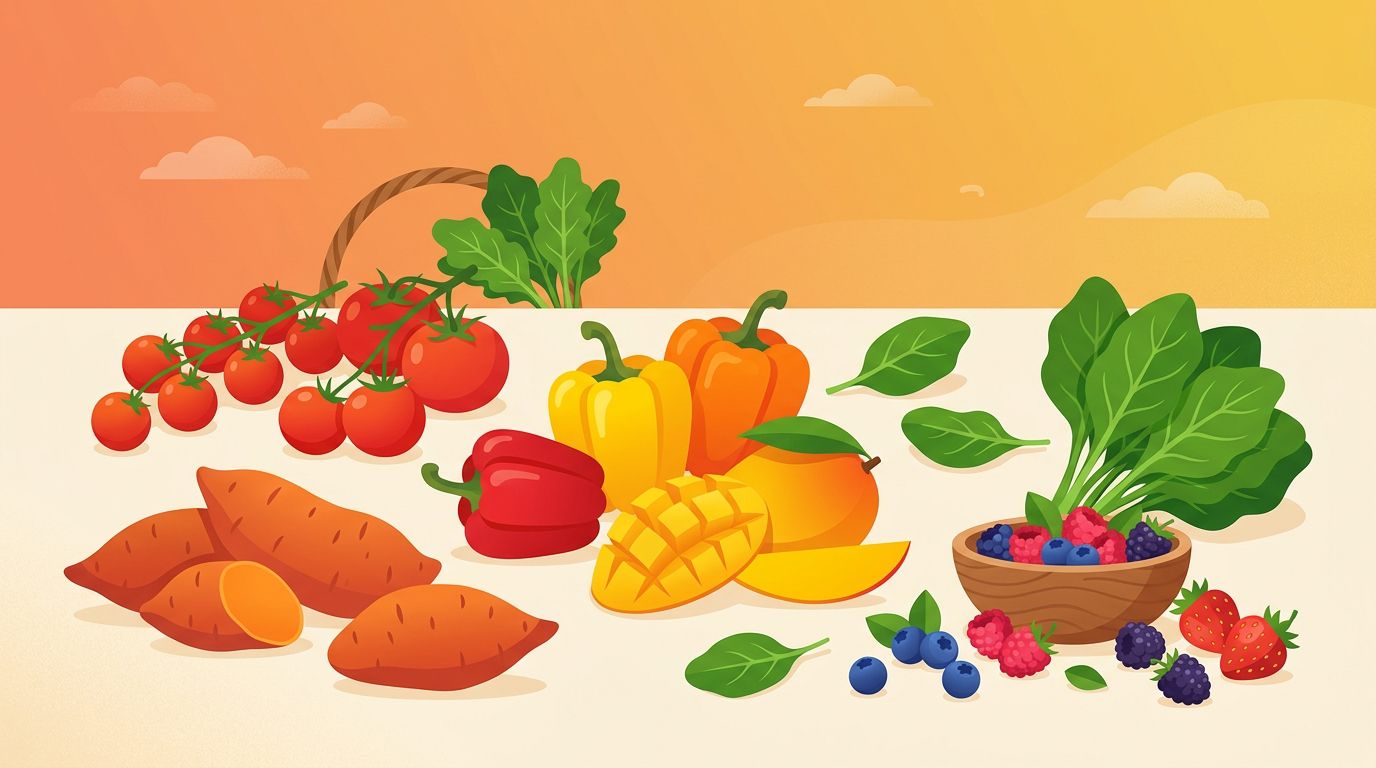
Sweet potatoes. Packed with beta-carotene, which your body converts to vitamin A. Vitamin A supports skin cell turnover and repair. Bonus: beta-carotene also gives your skin a natural warm undertone that enhances your tan's golden glow.
Eggs. Contain selenium, vitamin E, and protein — all important for skin repair. Plus they're easy to make and go with everything.
Bonus Tan-Enhancing Foods
Some foods don't just help recovery — they can actually make your tan look better:
Carrots and tomatoes. The carotenoids in these foods deposit in your skin over time, giving it a warm, golden undertone. Studies have shown that people who eat carotenoid-rich diets are rated as more attractive because of the healthy skin glow it produces. Mangoes. Beta-carotene plus vitamin C. A mango smoothie after tanning is chef's kiss for both recovery and color enhancement.
What to Avoid After Tanning
Alcohol. This is a big one. Alcohol dehydrates you significantly, and your body is already dehydrated from sun exposure. Drinking after tanning doubles the dehydration hit, which can lead to peeling, premature fading, and your skin looking dull instead of glowy. If you're at a pool party and tanning, at least match every alcoholic drink with a glass of water.
Sugary drinks and processed snacks. Sugar promotes inflammation in the body. After tanning, when your skin is already dealing with UV-induced inflammation, loading up on sugar makes it worse. Soda, candy, and processed snacks are the opposite of what your skin needs. Salty processed foods. Excess sodium dehydrates you. Chips and fast food after tanning aren't helping. Caffeine in excess. A cup of coffee is fine, but three espressos after a tanning session will dehydrate you. Keep it moderate.
A Perfect Post-Tanning Snack
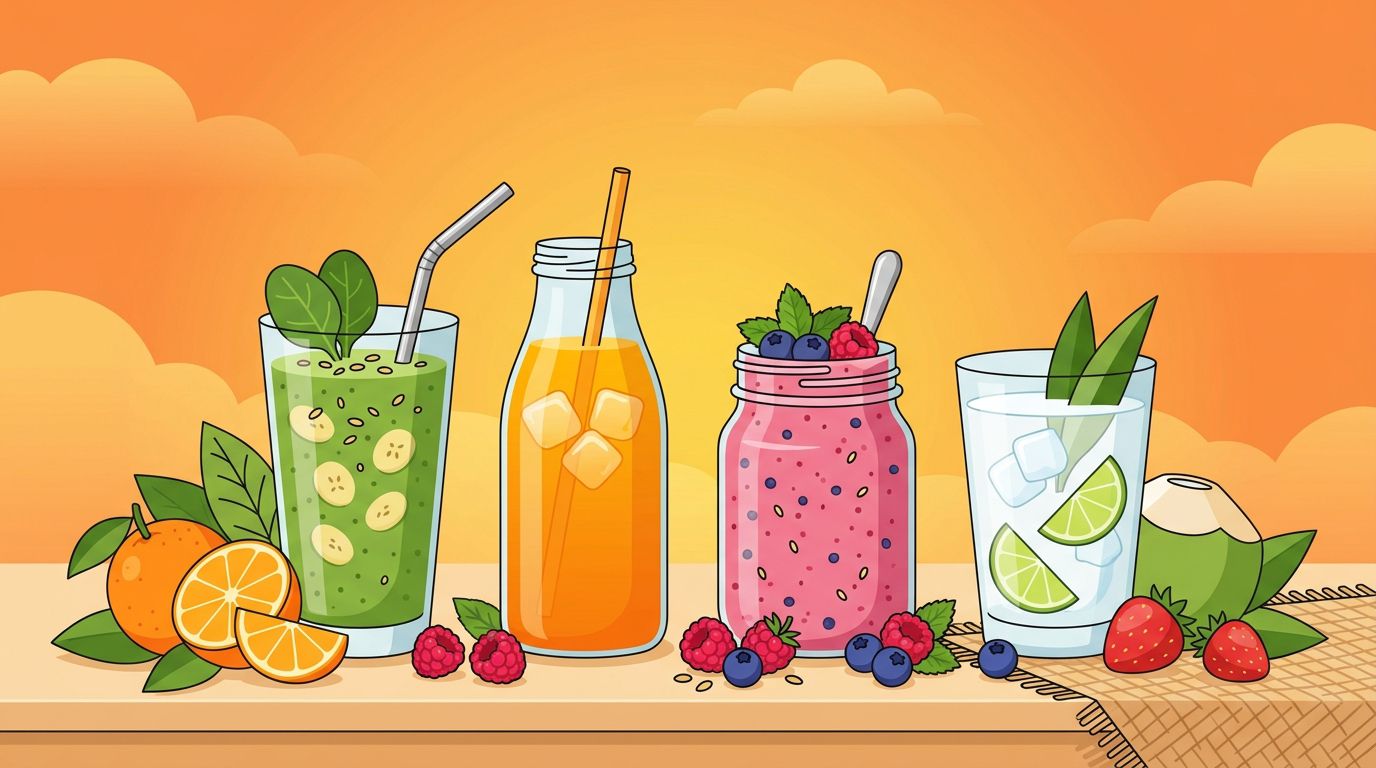
If you want one easy, perfect post-tanning snack: a smoothie with frozen berries, half a mango, a splash of coconut water, and a handful of spinach. It covers anti-inflammatory, hydration, skin repair, AND tan enhancement in one delicious glass. Make it right after your session and your skin recovery game will be unmatched.
What you put IN your body matters just as much as what you put ON it. Feed your skin right and your tan will look better, last longer, and your skin will stay healthier all summer long.
The 2-Hour Recovery Window
Timing matters almost as much as the food itself. Your body's repair mechanisms are most active in the first two hours after UV exposure. During this window, your skin cells are neutralizing free radicals, repairing DNA micro-damage, and stabilizing the melanin they just produced. Eating the right nutrients during this window gives your body the raw materials it needs when it needs them most.
You don't need a full gourmet meal within minutes of coming inside. A quick snack — even just a handful of berries and a glass of coconut water — is enough to kickstart recovery. Then follow up with a more complete meal within 2 hours. The point is getting antioxidants, hydration, and healthy fats into your system while your skin is actively working to repair and build pigment.
Plan ahead: prep your post-tanning snack before you head outside. Cut watermelon, wash berries, portion out nuts. When you come inside warm and thirsty, the last thing you want is to start prepping food. Having everything ready makes good nutrition effortless. Use our tanning calculator to plan your session timing so your recovery meal lines up naturally.
Vitamin D and Post-Tanning Nutrition
Here's something most tanning nutrition guides skip: your body just produced a surge of vitamin D from that UV exposure. Vitamin D synthesis peaks 24-48 hours after sun exposure, and certain nutrients help your body process and use that vitamin D more efficiently.
Vitamin K2 works together with vitamin D to direct calcium where it needs to go. Good sources: eggs, cheese, natto (fermented soybeans), and chicken. If you're already eating eggs after tanning, you're covering this without trying.
Magnesium is required for your body to convert vitamin D into its active form. Without enough magnesium, the vitamin D your skin just produced sits there unused. Magnesium-rich foods include almonds, spinach, dark chocolate (another win for post-tanning chocolate), pumpkin seeds, and avocado.
Healthy fats improve vitamin D absorption since it's a fat-soluble vitamin. This is another reason avocado, salmon, and nuts are perfect post-tanning foods — they help you absorb both the vitamin D your skin produced AND the fat-soluble antioxidants you're eating. Check our vitamin D calculator to estimate how much D your session generated.
Building a Weekly Post-Tanning Meal Plan
Consistency compounds. Eating recovery foods after one session is good. Doing it after every session all season long is transformative. Here's a simple weekly rotation if you tan 3-4 times per week:
Session 1: The Berry Smoothie. Blend 1 cup frozen mixed berries, half a banana, a handful of spinach, 1 tablespoon chia seeds, and coconut water. Takes 3 minutes, covers antioxidants, omega-3s, hydration, and vitamin C. Perfect for days when you don't have much time.
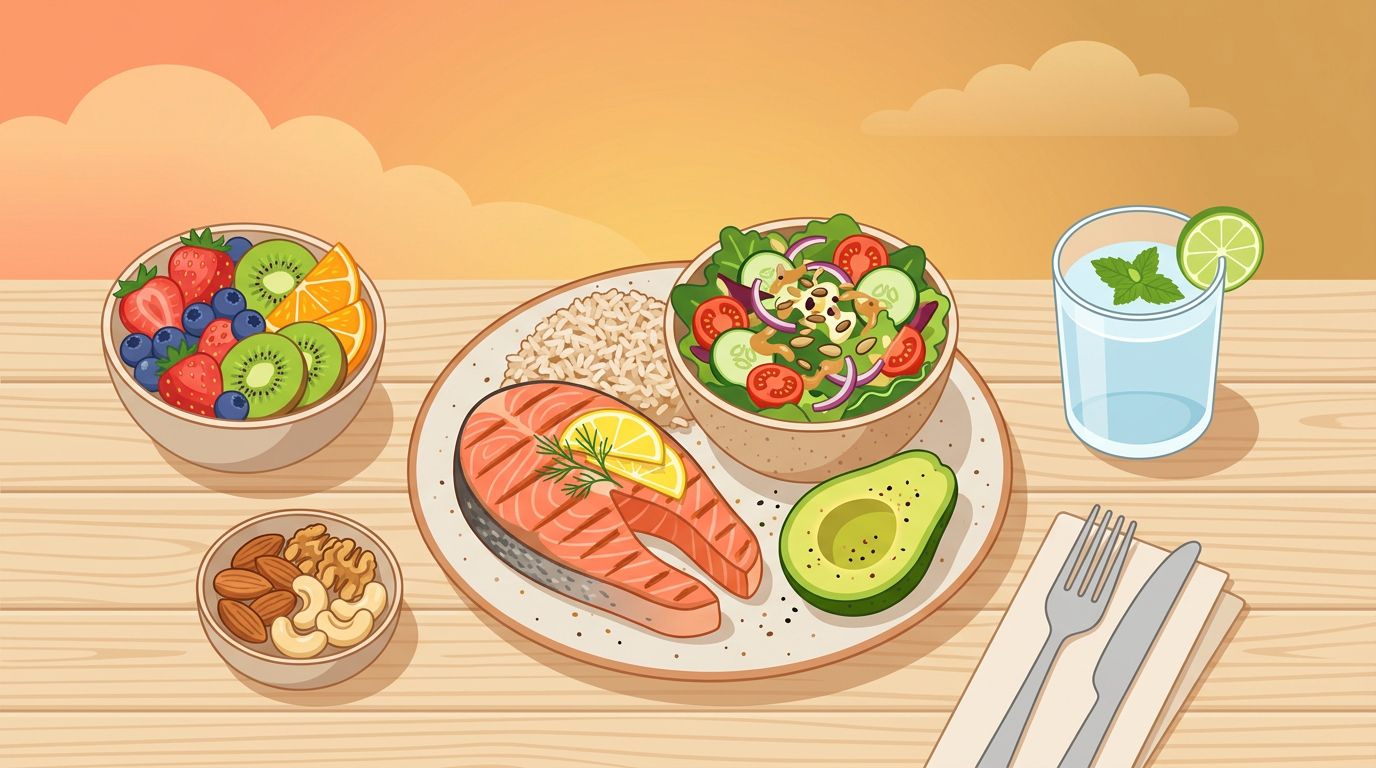
Session 2: The Salmon Plate. Baked or pan-seared salmon with roasted sweet potato and a side salad with spinach, cherry tomatoes, and avocado. This is the all-star recovery meal — omega-3s, beta-carotene, lycopene, vitamin E, and vitamin C in one plate. Cook the sweet potato ahead of time and the whole meal comes together in 15 minutes.
Session 3: The Snack Board. A bowl of watermelon, a handful of almonds, 2 squares of dark chocolate, and a cup of green tea. This is low-effort but hits every recovery category: hydration (watermelon), anti-inflammatory (green tea, dark chocolate), antioxidants (everything), and healthy fats (almonds).
Session 4: The Egg Bowl. Two scrambled eggs with sauteed spinach, half an avocado, and sliced tomatoes on toast. Coffee is fine with this one since the water-rich foods offset any mild dehydration from caffeine. This covers protein, healthy fats, vitamin E, and lycopene.
Rotate through these four options and you've built a sustainable nutrition habit that supports your tanning routine all season. No complicated recipes, no expensive supplements — just real food that helps your skin perform at its best.
Pro tip: Keep a "tanning snack kit" in your fridge: pre-washed berries, cut watermelon, a bag of almonds, and coconut water. Grab from it immediately after every session. When recovery nutrition is as easy as opening the fridge, you'll actually do it consistently — and your tan will show the difference within two weeks.
For a complete nutrition strategy that supports tanning from the inside out, check our nutrition for a healthy tan guide and pair it with our safe tanning tips for the full picture. Your skin is hungry after every session — feed it right.
Learn more: Nutrition for a Healthy Tan | Essential Tanning Tips