Fix an orange self-tan by exfoliating gently over several days to lift the surface color faster than it would fade on its own, then moisturizing heavily in between. There is no instant undo — anything strong enough to strip DHA stain in one shot will also irritate your skin. Prevention beats correction: the orange tint almost always comes from too much product, a shade that doesn't match your undertone, or applying over dry, uneven patches.
Why self-tanner turns orange in the first place
Self-tanner works using DHA (dihydroxyacetone), a sugar-derived ingredient that reacts with dead skin cells on the surface of your skin to create a brown color through a chemical process called the Maillard reaction — the same basic reaction that browns bread crust. It's not a dye or a stain sitting on top; it's a genuine color change in the outer layer of skin.
Orange happens for a few specific, fixable reasons:
- Too much DHA for your skin. Higher-percentage formulas produce darker, sometimes more orange-leaning results, especially on fair or cool-toned skin that doesn't have much natural pigment to blend with.
- Undertone mismatch. A golden, DHA-heavy formula applied to cool-undertone skin can look orange rather than tan because there's no warm base in the skin to balance it. See our shade guide, how to choose your self-tanner shade, if this is a repeat problem.
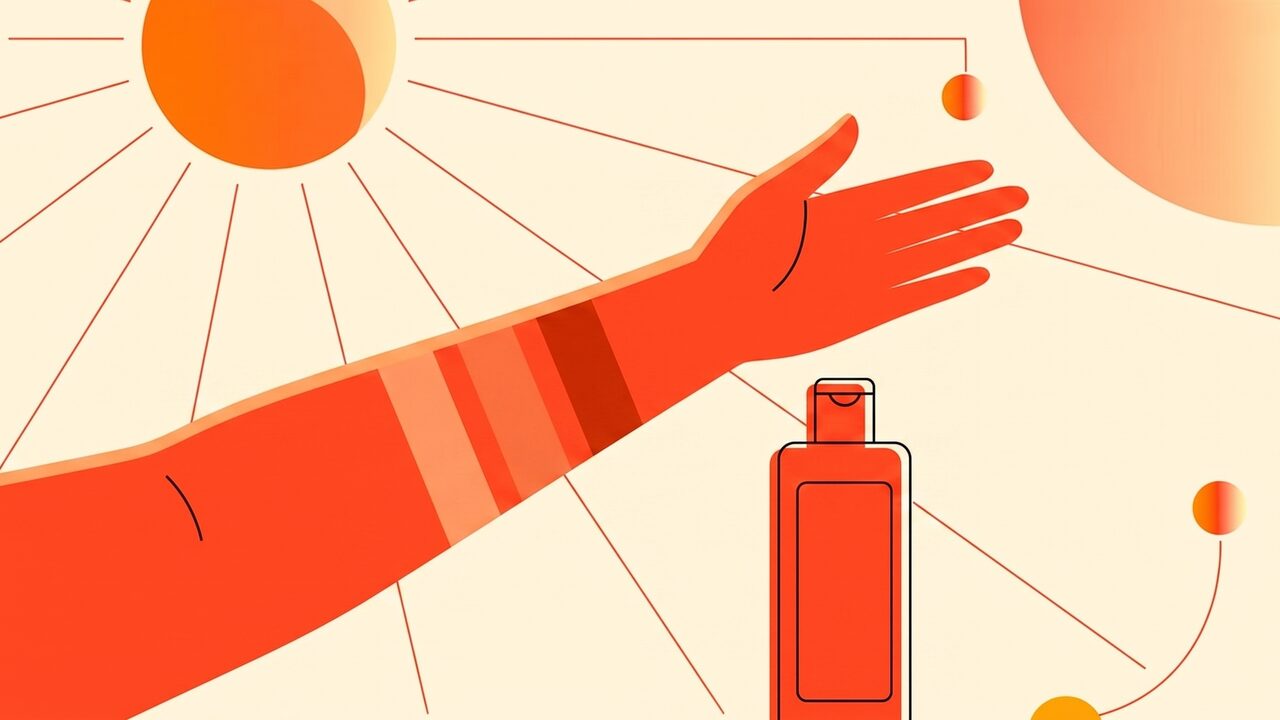
- Dry patches soak up more color. Elbows, knees, ankles, wrists and the backs of hands have thicker, drier skin that absorbs DHA more heavily and darkens faster than the rest of your body, creating those obvious orange bands even when the rest of your tan looks fine.
- Layering before the first coat finishes developing. Applying a second coat too soon stacks color on top of color that hasn't finished reacting yet, pushing the result darker and more orange than intended.
The rescue routine that actually works
There's no product that instantly reverses DHA once it's developed. What works is speeding up the natural process your skin already uses to shed the stained outer layer.
- Take a warm bath or long shower first. Warm water alone softens the top layer of skin and lifts some color without scrubbing.
- Exfoliate with a gentle mitt or scrub. Circular motions, moderate pressure, focus on the darkest and most orange areas. Don't scrub until skin feels raw — that irritates skin without removing meaningfully more color and can leave patches worse than before.
- Repeat once a day for 2-3 days. Exfoliation compounds; you'll see a noticeable difference by day two or three rather than after one aggressive session.
- Moisturize heavily after every exfoliation. Dry skin holds onto stained cells longer. A rich, fragrance-free lotion applied right after each exfoliating session helps skin turn over and shed the color faster.
- For stubborn patches, use a dedicated tan remover. Purpose-built tan-removal products use mild acids to speed up cell turnover on the surface without the harshness of a full-body scrub. They work best on small areas like hands and ankles rather than large stretches of skin.
For the full step-by-step removal process, including what to use on your face separately from your body, see how to remove self-tan fast.
What to avoid — the "kitchen cupboard" fixes
A lot of home remedies circulating online do more harm than good:
- Lemon juice. Citric acid can lighten some surface stain, but it's also acidic enough to irritate skin and, worse, makes skin more reactive to UV light for a period afterward. Using lemon juice and then going outside is a genuine sunburn risk, not just an old wives' tale.
- Baking soda scrubs. Baking soda is alkaline and disrupts your skin's natural pH balance, which can leave skin dry, tight and more prone to breaking out or irritation. It may lift some color through sheer abrasion, but the trade-off in skin barrier damage usually isn't worth it.
- Bleach or peroxide-based whitening products. These are made for hair or fabric, not skin, and risk chemical burns. Never use them to fix a tan.
- Aggressive scrubbing with a rough loofah or pumice stone. More pressure doesn't remove more color proportionally, but it does remove more of your skin's protective barrier, leaving it raw and sometimes blotchy in a new way.
Preventing orange next time
Once the current tan has faded, a few changes to your routine stop the same result from happening again:
- Exfoliate your whole body the night before, focusing on elbows, knees, ankles and hands. Even, smooth skin absorbs DHA more evenly.
- Moisturize dry areas lightly right before applying — a thin layer on elbows, knees and ankles acts as a barrier that stops those spots grabbing extra color.
- Use a mitt to apply, not bare hands. Hands develop faster and darker than the rest of your body because skin there is naturally drier.
- Wait the full development time on the bottle before a second coat if you want more depth, rather than reapplying while the first layer is still working.
- Pick a formula that matches your undertone rather than the darkest option on the shelf — see how to choose your self-tanner shade for how undertone changes which formula looks natural on you.
A little preparation before application prevents almost every case of the orange-hands-and-ankles look people are trying to fix after the fact. It's far easier to avoid than to reverse.
Frequently asked questions
How long does it take for an orange self-tan to fade completely?
Untouched, self-tanner fades naturally over 5-10 days as skin sheds its outer layer. With daily gentle exfoliation, you can visibly reduce orange tone within 2-3 days, though full fade to your natural skin still takes about a week.
Does washing with dish soap or vinegar remove self-tanner faster?
Both are common online suggestions, but neither is designed for skin. Dish soap strips natural oils aggressively and can leave skin dry and irritated. Vinegar's mild acidity does a bit of what lemon juice does, with similar downsides — stick to a proper exfoliating mitt and moisturizer instead.
Why are only my hands, wrists and ankles orange while the rest looks fine?
These areas have thicker, drier skin that absorbs more DHA than smoother areas like your torso or thighs. It's the single most common complaint with self-tanner and the reason barrier cream or a light layer of lotion on those spots before applying makes such a difference.
Can I put self-tanner over the orange patches to blend them instead of removing it?
No — adding more product to already-dark skin just deepens the orange further. Removing excess color through exfoliation first, then reapplying evenly once skin is back to a clean base, gives a far better result.
Is it safe to exfoliate my face the same way as my body to fix an orange tan there?
Use a gentler approach on your face. Facial skin is thinner and more sensitive, so a soft konjac sponge or a mild chemical exfoliant works better than a body mitt, and you should moisturize more often since facial skin dries out faster under repeated exfoliation.
Bottom line
Orange self-tan comes from too much DHA, a shade mismatch, or dry patches soaking up extra color — not from doing something dramatically wrong. Fix it with gentle daily exfoliation and heavy moisturizing over a few days rather than harsh kitchen remedies, and prevent it next time by exfoliating evenly beforehand and matching your formula to your undertone.