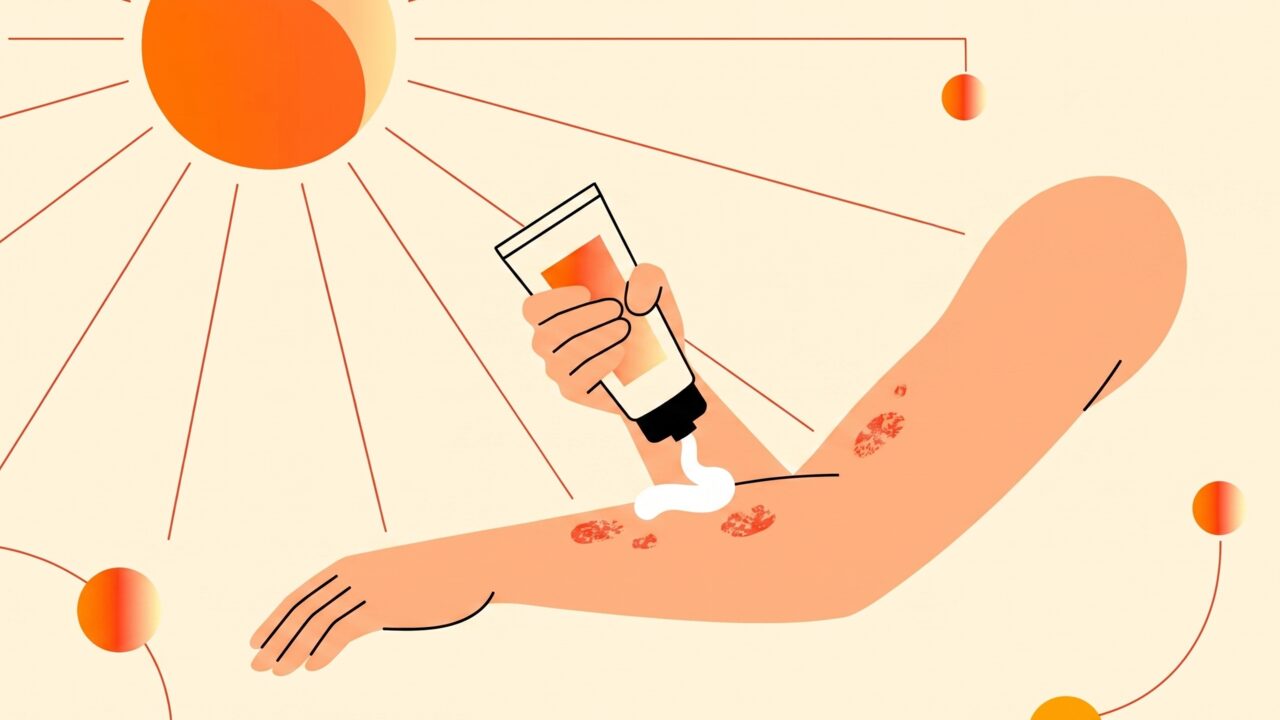
Sunlight genuinely helps a lot of people with eczema — it's why controlled UV light (phototherapy) is a real dermatology treatment for it — but the same trip outside can also trigger a flare through heat, sweat, and dry, cracked skin. The honest answer is that eczema and sun exposure have a two-sided relationship, and which side you land on depends on how you manage it, not just whether you go outside.
Why UV can calm eczema down
Eczema (atopic dermatitis) involves an overactive immune response in the skin. UV light, in the right dose, suppresses some of that local immune activity and can reduce inflammation — which is the whole basis of narrowband UVB phototherapy, a standard, doctor-supervised treatment for moderate-to-severe eczema that hasn't responded well to creams alone. Many people with mild eczema also notice their skin looks and feels better after a bit of sensible sun, and some flares genuinely improve over summer.
This is a real, medically recognized effect — not wishful thinking. But there's an important distinction: phototherapy uses a specific UV wavelength, dose, and frequency, delivered by a machine under medical supervision, on skin that's monitored for reaction. Lying outside for an hour at midday is a completely different, uncontrolled exposure, and it can just as easily go the other way.
Why the same sun can trigger a flare
Several things about outdoor tanning work against eczema-prone skin specifically:
- Heat and sweat — sweating is one of the most commonly reported eczema triggers. A long, hot tanning session is close to a worst-case setup for sweat-triggered flares, especially in the folds of elbows, knees, and neck.
- Dry, damaged skin barrier — eczema already means a compromised skin barrier that loses moisture faster than healthy skin. Sun and wind exposure dries skin further, and a dried-out barrier lets in more irritants and allergens, which can restart inflammation.
- Sunburn on top of eczema — a burn is inflammation layered on inflammation. If you burn on top of an eczema patch, expect a worse flare, not just a worse burn. Our guide on how to tan without burning covers the pacing that avoids this.
- Chlorine and salt water — common eczema aggravators if your tanning routine includes pool or ocean swimming, which strips natural oils further.
Sunscreen: often the actual problem
A lot of "sun makes my eczema worse" reports are really "sunscreen makes my eczema worse." Fragrance, alcohol-based sprays, and some preservatives in chemical sunscreens are common irritants for eczema-prone skin, and stinging or breakouts after applying sunscreen get blamed on the sun itself.
Mineral sunscreens — the ones using zinc oxide or titanium dioxide as the active ingredient — tend to be better tolerated by sensitive and eczema-prone skin than chemical filters, and are frequently the first recommendation dermatologists give for reactive skin. Look for "mineral," "physical," or "zinc oxide" on the label, and choose fragrance-free formulas. Patch-test any new sunscreen on a small area of skin, such as the inside of your forearm, a day or two before you plan to use it all over. If you're prone to reactions generally, our guide on tanning with sensitive skin covers the same product-picking logic.
A moisturize-first routine for tanning with eczema
- Don't tan during an active flare. Wait until inflamed, broken, or weeping skin has calmed down. Sun and sweat on active eczema rarely goes well.
- Moisturize heavily before you go outside, not after. A well-hydrated barrier tolerates heat and dryness better than skin you moisturize as an afterthought.
- Choose a fragrance-free, mineral sunscreen and patch-test it first.
- Keep sessions shorter and cooler than you might otherwise — moderate UV rather than the most intense part of the day. See understanding the UV index for reading conditions.
- Rinse off sweat, chlorine, or salt water promptly and reapply moisturizer as soon as you're done.
- Watch how your specific skin responds and adjust. Some people with eczema do well with regular, brief, moderate sun; others flare every time. There's no universal answer, only your own pattern.
What about swimming and humidity?
Where you tan matters almost as much as how long. Dry heat tends to be more forgiving for eczema than humid, sweaty conditions, since sweat sitting on inflamed skin is a well-known trigger on its own. If your tanning routine involves a pool or the ocean, plan for it: rinse off as soon as you're out, and moisturize again immediately rather than letting salt or chlorine residue sit on your skin while it dries in the sun. A quick reapplication of a fragrance-free moisturizer after a swim break does more for flare prevention than almost anything else in this routine.
If your eczema is moderate to severe, or you're considering UV as an actual treatment rather than incidental sun while tanning, that's a conversation for a dermatologist — they can prescribe supervised phototherapy at a dose and frequency that's actually been shown to help, rather than you guessing with unpredictable outdoor sun.
Frequently asked questions
Is sun good or bad for eczema?
Both, depending on how it's managed. Controlled UV light can calm eczema inflammation — that's why phototherapy is a real treatment — but heat, sweat, and dry skin from uncontrolled sun exposure commonly trigger flares. Moisturizing well and avoiding sun during an active flare makes the difference.
Can I use regular sunscreen if I have eczema?
You can, but fragrance and some chemical filters commonly irritate eczema-prone skin. Mineral sunscreens with zinc oxide or titanium dioxide, fragrance-free, are usually better tolerated. Patch-test any new product before applying it all over.
Should I avoid tanning completely if I have eczema?
Not necessarily. Many people with mild, well-controlled eczema tan without issue, especially with a moisturize-first routine and shorter, moderate sessions. Avoid tanning during an active flare, and stop if a session seems to trigger one.
Is phototherapy the same as tanning outside?
No. Phototherapy uses a specific, medically supervised UV wavelength and dose on monitored skin. Outdoor tanning is uncontrolled by comparison — it can still help mild eczema for some people, but it's not a substitute for prescribed treatment if you have moderate or severe eczema.
Bottom line
Sun exposure and eczema have a real, two-way relationship: UV can calm inflammation, which is why phototherapy exists as a treatment, but heat, sweat, and a dried-out skin barrier can just as easily set off a flare. Moisturize before you go outside, pick a fragrance-free mineral sunscreen, avoid tanning during active flares, and pay attention to your own pattern. If eczema is more than mild, talk to a dermatologist about supervised phototherapy rather than treating casual sun exposure as your treatment plan.