Melanotan II — the peptide behind most "tanning nasal sprays," injections, and the low-dose kits people say they get from compounding pharmacies — is not approved for human use anywhere in the world, and it's been linked to nausea, new or darkening moles, dangerously prolonged erections, and case reports of melanoma. Whatever a TikTok video told you, this is one of the clearer "don't" answers in the whole tanning conversation.
What Melanotan II actually is
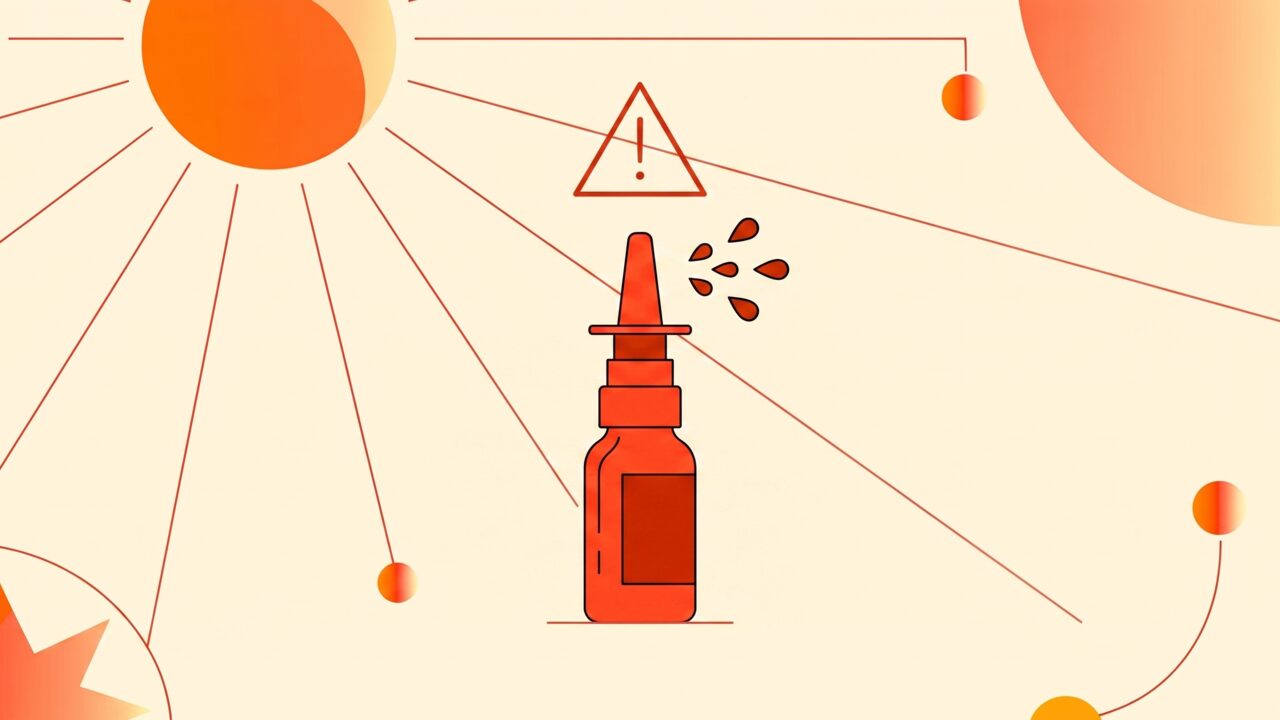
Melanotan II is a synthetic version of alpha-melanocyte-stimulating hormone (alpha-MSH), the same hormone your body naturally releases in tiny, tightly regulated amounts to trigger melanin production after sun exposure. The synthetic version is designed to activate melanocytes — your pigment-producing cells — directly and continuously, without needing UV exposure at all. That's the appeal: a tan without the sun. It's typically sold as an injectable, though nasal spray versions marketed the same way have circulated online and on social platforms.
The problem is that "stimulates the cells that produce melanin, on an ongoing basis, at a dose nobody has established as safe" is not a small ask of your skin. Melanocytes are the same cells that, when they grow abnormally, cause melanoma.
Not approved, anywhere
Melanotan II has never been approved as a drug for tanning by any major regulator. The FDA has not evaluated it for safety or effectiveness and has warned consumers against products marketed as "Melanotan," noting they're sold illegally, often without any quality control over what's actually in the vial. In the UK, the MHRA has issued similar warnings and has seized illegally supplied Melanotan products, because it's an unlicensed medicine that cannot legally be sold for human use there either.
"From a compounding pharmacy" doesn't change this. Compounding pharmacies can legally prepare certain medications to an individual prescription, but Melanotan II isn't an approved drug a doctor can legitimately prescribe for tanning in the first place — a compounding pharmacy selling it for that purpose is operating outside the same regulatory approval that covers medications you'd actually trust. "Low dose" and "from a pharmacy" both sound reassuring, but neither one means it's been tested or approved.
What's actually been reported
Case reports and adverse event data on Melanotan II users describe a fairly consistent set of problems:
- Nausea and flushing — extremely common, especially with the first few doses.
- New moles and darkening of existing moles — reported repeatedly, which matters because changing moles are exactly the warning sign dermatologists tell people to watch for.
- Priapism — a prolonged, sometimes painful erection unrelated to arousal, a known effect of alpha-MSH pathway drugs and documented in case reports involving Melanotan users specifically. It's a medical emergency if it lasts more than a few hours.
- Elevated blood pressure and appetite suppression — reported side effects consistent with how the hormone pathway works elsewhere in the body.
- Case reports of melanoma — a small number of published cases describe melanoma developing in people using Melanotan products, including in existing moles that had recently changed. This doesn't prove Melanotan causes melanoma — case reports can't establish causation — but a drug that works by continuously activating pigment cells producing melanoma case reports is exactly the pattern that should make anyone cautious, not reassured.
The TikTok version
The recent wave of interest traces largely to social video content presenting Melanotan as a hack: inject or spray, skip the sun, wake up tan. What those videos consistently leave out is the regulatory status, the side effect list above, and the fact that "unlicensed" means nobody has verified what's actually in the product you're buying — dose, purity, and sterility are all unknowns when you're buying from an unregulated online seller rather than a pharmacy dispensing an approved medicine.
Gummies and drops: different product, same lack of evidence
Separately, tanning gummies and drops marketed without any peptide or prescription requirement are a different category, but not necessarily a safer one just because they're not injected. Many of these products use canthaxanthin or beta-carotene, carotenoid pigments that build up in your skin and fat tissue and can give an orange-yellow tint, but that's pigment deposition, not melanin production — it isn't a tan in any real sense. Canthaxanthin specifically has been linked, at the doses used in some tanning products, to crystalline deposits in the retina, a documented eye finding with heavy or prolonged use. There is no solid evidence these products produce a genuine, melanin-based tan, whatever the marketing implies.
The one legitimate related drug — and why it's not the same thing
There is a related, actually approved drug: afamelanotide (brand name Scenesse), a slow-release implant used to treat erythropoietic protoporphyria, a rare condition causing severe pain from light exposure. It's prescription-only, delivered as a controlled implant rather than an injection or spray you dose yourself, monitored by a physician, and approved for a specific medical condition — not for cosmetic tanning. Its existence doesn't make Melanotan II safer or more legitimate; it shows what actual regulatory approval and medical monitoring for this hormone pathway looks like, which is nothing like buying an unlicensed spray online.
Safer routes to color
If the goal is skin color without relying purely on sun, the options with actual safety data behind them are self-tanner — DHA-based lotions and mousses, applied topically, with minimal absorption — professional spray tanning with approved solutions, and controlled, UV-index-aware outdoor sun exposure. See self-tan versus spray tan and how to self-tan for the practical side of the safer options, and understanding the UV index if you'd rather build color the old-fashioned way with the sun.
Frequently asked questions
Is Melanotan II legal to buy and use?
It's not approved for human use by the FDA, the UK's MHRA, or any major regulator. It's sold illegally online, often without any verified quality control, and possession or supply laws vary, but the product itself has never passed the safety review that legitimate medications go through.
Does Melanotan II actually cause melanoma?
Case reports describe melanoma developing in some Melanotan users, including in moles that had recently changed, but case reports alone can't prove cause and effect. What is clear is that the drug works by continuously stimulating the same cells that, when they grow abnormally, become melanoma — reason enough for caution regardless of whether causation is ever formally proven.
Are tanning gummies with canthaxanthin safe?
They don't produce a real, melanin-based tan — the color comes from pigment deposits in your skin, not melanin production. Canthaxanthin specifically has been linked to eye deposits with heavy use. There's no strong evidence they're an effective or risk-free alternative to sun or self-tanner.
What do regulators actually say about nasal tanning sprays?
The FDA and UK's MHRA have both warned against Melanotan products, stating they are unlicensed, unapproved, and sold illegally, with no verified safety or quality data. Neither has approved any nasal spray or injectable version for tanning.
Bottom line
Melanotan II works by directly and continuously stimulating the cells that make melanin, and it has never been approved for that use by any major regulator — the FDA and MHRA have both warned against it specifically. Reported side effects range from nausea and mole changes to priapism, and a small number of melanoma case reports exist alongside it, which is worth taking seriously even without proof of causation. Nasal sprays don't avoid these issues; they're the same unregulated hormone by a different delivery route. Self-tanner, professional spray tanning, and UV-index-aware sun exposure remain the routes to color with actual safety data behind them.