Everyone Wants to Tan Faster
This is literally the number one question we get. "How do I tan faster?" And honestly, we get it. Nobody wants to spend weeks slowly building color when you could be bronze by Friday. The good news: there are real, proven ways to speed up your tan. The catch: none of them involve skipping sunscreen.
Understand Your Starting Point
First, some real talk. How fast you tan depends on your skin type. If you have more melanin naturally (darker hair, olive skin), you'll tan faster. If you're very fair with light eyes, tanning takes longer and you need to be more careful. That's just biology, and no hack changes it.
But regardless of your skin type, these tips will help you get the most color in the least time.
Nail Your UV Timing
The single biggest factor in tanning speed is UV intensity. Tan during peak UV hours (10 AM - 2 PM) and you'll get significantly more melanin production than at 4 PM. Check your weather app for the daily UV index:
UV 3-4: Slow tanning, longer sessions needed. UV 5-6: Moderate, good results in 25-35 minutes. UV 7-8: Strong, noticeable results in 15-25 minutes. UV 9+: Extreme, very short sessions only with high SPF.
Timing your sessions during peak UV is the simplest way to tan faster. Period.
Exfoliate Before You Tan
Dead skin cells on the surface of your skin block UV and cause uneven tanning. Exfoliating 12-24 hours before a tanning session removes that dead layer and exposes fresh skin that responds better to UV.
Use a gentle body scrub or exfoliating mitt. Don't go overboard — you want to remove dead skin, not irritate the fresh skin underneath. Focus on areas that tend to be patchy: knees, elbows, ankles, and shoulders.
Eat Your Way to a Faster Tan
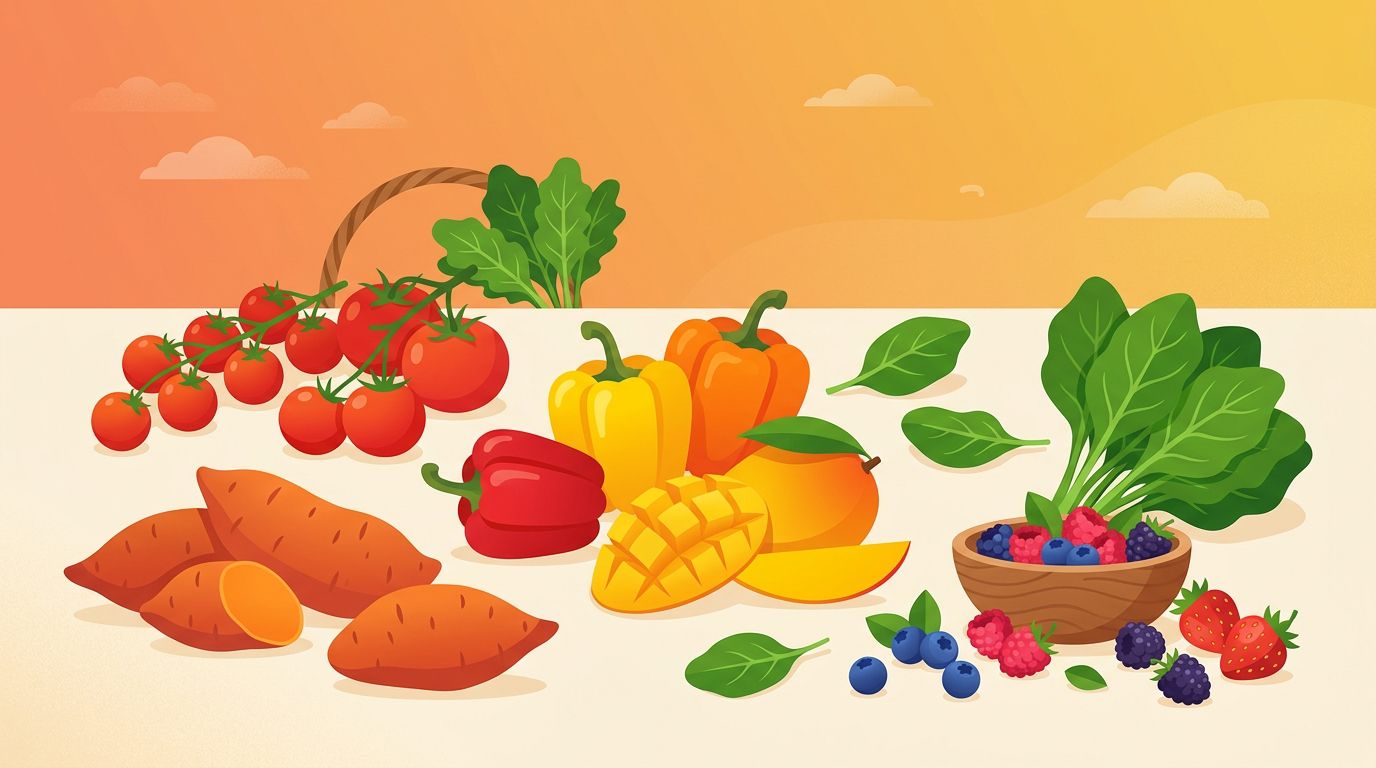
This sounds weird but it's legit. Certain foods increase your skin's melanin production:
Beta-carotene foods: Carrots, sweet potatoes, mangoes, cantaloupe. These give your skin a natural warm undertone and can enhance melanin production. Lycopene-rich foods: Tomatoes, watermelon, pink grapefruit. Some studies suggest lycopene may help protect against UV damage while supporting the tanning process. Omega-3s: Salmon, walnuts, chia seeds. Healthy fats keep your skin supple, which helps it tan more evenly.
Start eating these foods a week or two before your tanning season for best results.
Use Tanning Accelerators
Tanning accelerators (also called tanning lotions or tan enhancers) contain ingredients like tyrosine, an amino acid that's involved in melanin production. When applied before sun exposure, they can genuinely speed up how fast your skin darkens.
Look for products labeled "tan accelerator" or "tan enhancer." Popular options include Australian Gold Dark Tanning Accelerator and Hawaiian Tropic Dark Tanning Oil. Apply these UNDER your SPF, not instead of it.
Hydration Is Everything
Dehydrated skin tans slower and more unevenly. Drink plenty of water before and during your tanning sessions. Moisturize your skin daily — morning and night. Hydrated skin literally absorbs UV more efficiently and produces melanin faster than dry, flaky skin.
What NOT to Do
In the rush to tan faster, people do dumb things. Don't be that person:
Don't skip SPF. Burning doesn't give you a tan — it gives you damage. Burned skin peels off, taking any color with it. SPF 30 still lets you tan, just without the burn. Don't use reflectors or tin foil. This concentrates UV dangerously and causes severe burns. Just no. Don't extend sessions past your limit. More time doesn't always equal more tan. After a certain point (usually 1-2 hours), your skin hits a melanin production ceiling and extra time just adds damage. Don't tan daily. Your skin needs recovery time to actually produce and set melanin. Every other day is more effective than every day.
The Realistic Timeline
With these tips, most people see noticeable color after 3-5 sessions spread over 1-2 weeks. A solid, even base tan takes about 2-3 weeks of consistent tanning. Nobody goes from pale to bronze overnight — but with smart habits, you can cut that timeline down significantly.
Learn more: How to Tan Quicker | Foods That Help You Tan
The Science of Melanin Activation
Understanding how melanin actually works helps you tan smarter. When UV hits your skin, it triggers melanocytes to produce melanin. But here is the key: this process has a delay. Your melanocytes do not start pumping out melanin the second UV hits you. There is a 6-12 hour ramp-up period where your body recognizes the UV signal, activates the enzymatic pathway involving tyrosinase, and begins converting tyrosine into melanin.
This is why tanning results do not show up immediately. The color you see 2-3 hours after a session is mostly immediate pigment darkening — existing melanin being oxidized and redistributed. The real, lasting tan (called delayed pigmentation) takes 48-72 hours to fully develop. So when you are comparing your color between sessions, wait at least two full days before judging.
This also explains why back-to-back daily tanning is not optimal. If you tan Tuesday, your melanocytes are still producing melanin Wednesday and into Thursday. Adding another UV session Wednesday interrupts that process. Every other day gives your skin the full production cycle.
Water Reflection and Surface Tricks
Want to tan faster without increasing your UV exposure time? Reflective surfaces can boost the UV reaching your skin by 10-25% without you staying out any longer. Water reflects about 10-25% of UV, sand reflects 15-25%, and even concrete reflects about 12%. This is why beach tans develop faster than backyard tans at the same UV index.
If you are tanning in your backyard, you can create a similar effect. A white towel laid out around you reflects more UV than dark grass. A shallow kiddie pool next to your tanning spot mimics the reflective boost from being near water. Just remember: reflective surfaces mean more UV, so reduce your session time by about 15-20%. Use our tanning calculator to get an exact session time. And take our skin type quiz if you are not sure what Fitzpatrick type you are.
The Two-Day Cycle That Works
If you want to tan as fast as safely possible, here is the most effective cycle:
Day 1: Tan. Session during peak UV, SPF 30, timed for your skin type. Exfoliate the morning before. Apply tanning accelerator under SPF. Moisturize immediately after.
Day 2: Rest. No UV. Eat beta-carotene foods. Moisturize morning and night. Drink plenty of water. Your melanocytes are in full production mode.
Day 3: Tan again. Melanin from Day 1 has fully developed, skin is primed. Each session produces results faster because your melanocytes are now trained. This cycle gets you to a solid tan in about 2 weeks. For a complete approach, check our tanning schedule for beginners.
Common Speed-Tanning Myths
"Wet skin tans faster." Not really. The net effect of water droplets reflecting and focusing UV is basically neutral.
"Baby oil makes you tan faster." It makes you burn faster. Zero SPF and can magnify UV damage. Use actual tanning products.
"Higher SPF means slower tanning." SPF 30 blocks 97%, SPF 50 blocks 98%. That 1% difference is negligible for tanning speed but significant for burn protection.
Focus on what works — timing, exfoliation, hydration, melanin-boosting nutrition, and consistent sessions with rest days.
The Role of Skin Temperature
Here is something most people overlook: warm skin tans more efficiently than cold skin. When your skin temperature rises, blood flow to the surface increases, delivering more oxygen and nutrients to melanocytes. This is one reason why summer tanning is more productive per minute than spring tanning at the same UV index — it is not just the UV intensity, it is also the heat boosting your skin's responsiveness.
You can use this to your advantage. Before your session, warm up your skin with a quick warm shower or 5 minutes of gentle stretching in the sun. If it is a cool day, wear a hoodie for the first few minutes to trap body heat near your skin. Once you start your session, the combination of UV and warmth gives your melanocytes the best working conditions.
Conversely, tanning in cold wind — even at high UV — can reduce your melanin response because your body constricts blood vessels to conserve heat. If you are tanning in cooler conditions, find a wind-sheltered spot. The sun-warmed air against a wall or fence gives you better conditions than an open, breezy area at the same UV reading.
Tanning Accelerator Deep Dive
Tanning accelerators deserve more detail because they are one of the few products that genuinely speed up results when used correctly. There are three main types:
Tyrosine-based accelerators: Tyrosine is the amino acid your body converts into melanin. Applying it topically before UV exposure gives your melanocytes extra raw material to work with. Products like Australian Gold Dark Tanning Accelerator and California Tan contain tyrosine as their active ingredient. Apply under SPF, not instead of it.
Beta-carotene accelerators: Products like Carroten Tan Express contain carrot oil and beta-carotene that add a warm golden tint to your skin while supporting the tanning process. The golden tone from beta-carotene makes your developing tan look deeper and warmer even before your melanin has fully developed. See our detailed Carroten review for more.
Moisturizing accelerators: Some products are marketed as accelerators but are essentially rich moisturizers. While they do not contain tyrosine or beta-carotene, well-moisturized skin genuinely tans more efficiently than dry skin. So they are not wrong — just less targeted. Hawaiian Tropic Dark Tanning Oil falls partly in this category.