Deine Melanozyten brauchen bestimmte Nährstoffe, um Melanin effizient zu synthetisieren. Wenn du an diesen Nährstoffen Mangel hast, kann dein Körper auch mit genug Sonne nicht so gut Melanin produzieren.
Kupferreiche Lebensmittel: das Melanin-Essential
Kupfer ist ein Kofaktor für Tyrosinase – das Enzym, das die Melaninsynthese katalysiert. Ohne genug Kupfer verlangsamt sich die Melaninproduktion.
Dunkle Schokolade (70%+ Kakao) – 25% des Tagesbedarfs an Kupfer pro 30g. Cashews und Mandeln – 30% Tagesbedarf Kupfer pro Viertelbecher. Sonnenblumenkerne. Linsen und Kichererbsen – 50% Tagesbedarf Kupfer pro gekochter Tasse.
Vitamin-A-Lebensmittel: Melanozyten-Treibstoff
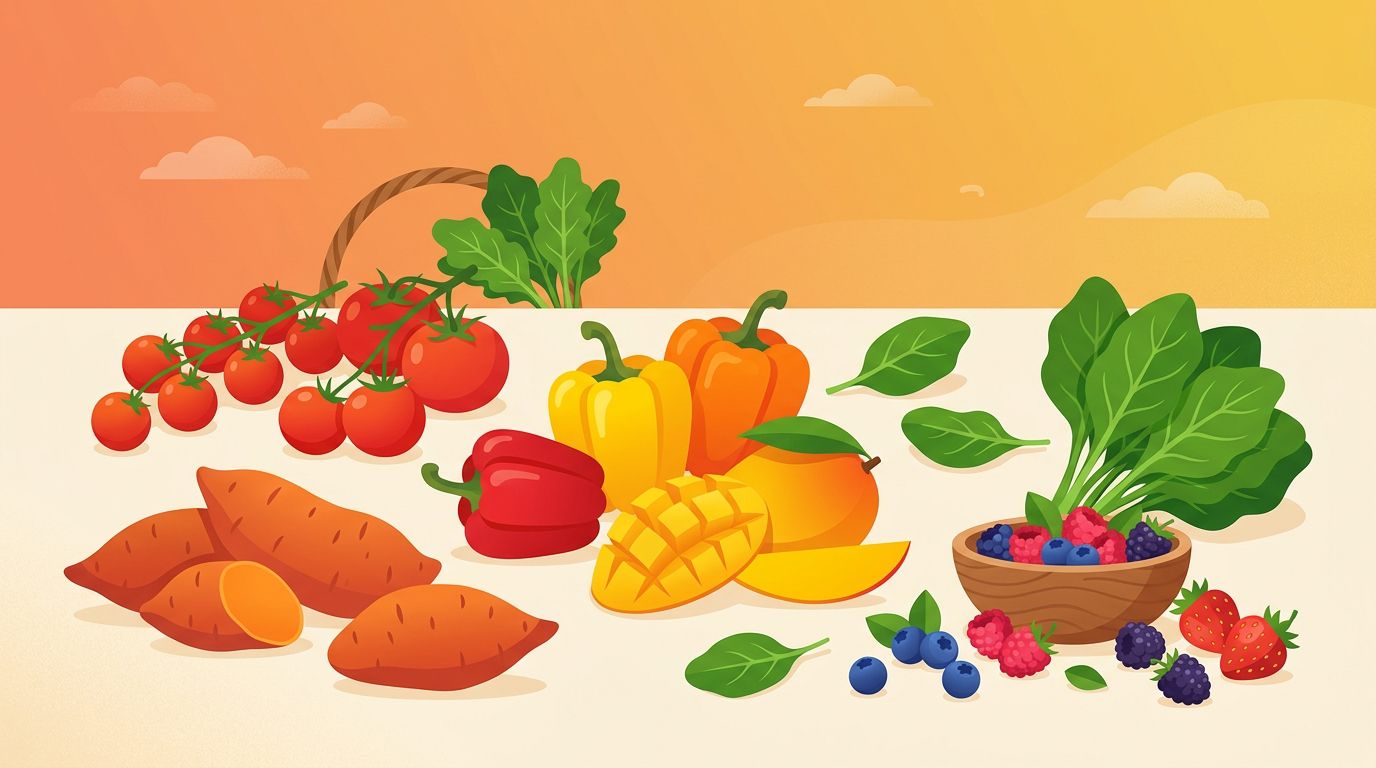
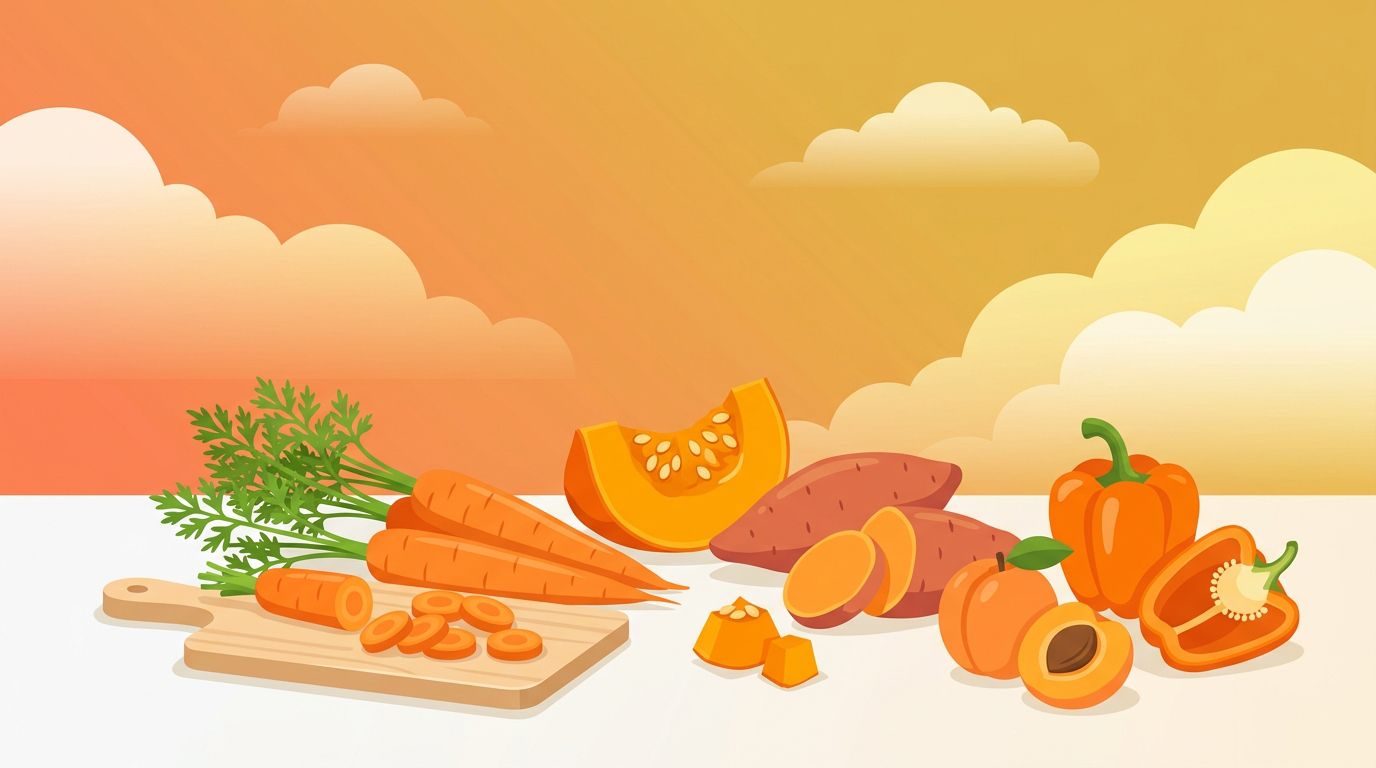
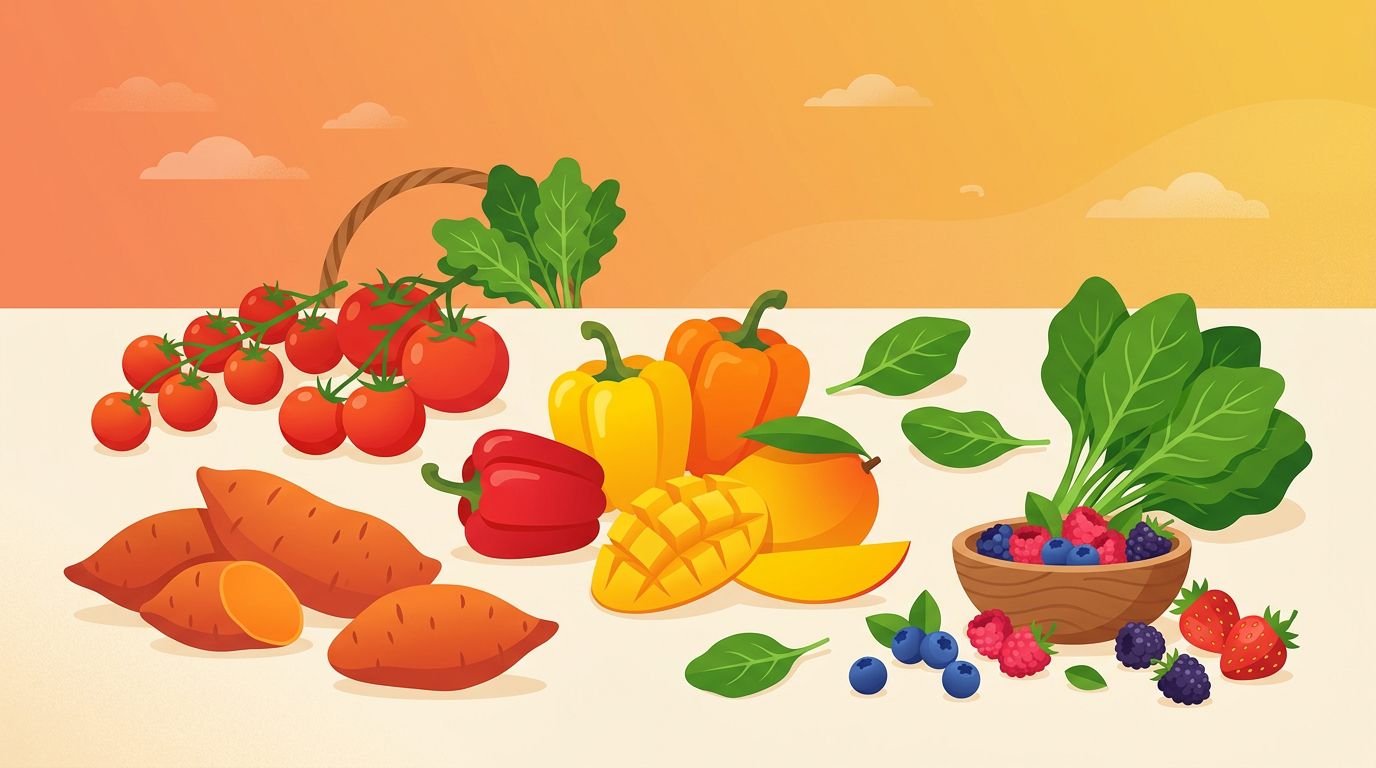
Essenziell für Wachstum und Funktion der Melanozyten. Süßkartoffeln – 400%+ des Tagesbedarfs an Vitamin A pro Kartoffel. Karotten – 100%+ pro große Karotte. Eier – vorgeformtes Vitamin A, das dein Körper sofort nutzen kann.
Vitamin-C-Lebensmittel
Unterstützt Hautgesundheit, Kollagen, schützt Melanozyten vor Schäden. Paprika – 170% des täglichen Vitamin C. Zitrusfrüchte, Erdbeeren, Kiwi.
Vitamin-E-Lebensmittel: Hautschutz
Mandeln – 50%+ des Tagesbedarfs an Vitamin E pro Viertelbecher. Avocado – plus gesunde Fette für Nährstoffaufnahme. Spinat – Vitamin E, A und Eisen alles in einem.
Melanin vs. Melatonin
Häufige Verwechslung: Melanin = Hautpigment (Bräune). Melatonin = Schlafhormon. Komplett verschiedene Dinge. Melatonin-Supplements werden dir NICHT beim Bräunen helfen.
Lohnen sich Supplements?
Erstmal Essen. Ein Multivitamin füllt Lücken. Vergiss teure „Bräunungspillen." Nimm NIEMALS Melanotan – unreguliert und gefährlich. Ergebnisse durch Essen brauchen 3-4 Wochen. Schau dir Lebensmittel die beim Bräunen helfen für mehr an.